"STUN-Like" Does Not Mean "Just Run STUN"
One of the most common misunderstandings around P2P overlays is that STUN alone is the product.
It is not.
RFC 8489 is explicit that STUN is a tool used by a NAT traversal solution, not a complete NAT traversal solution by itself. In other words, a real product still needs orchestration around the outside of STUN:
- identity
- authorization
- candidate exchange
- retry timing
- relay fallback
- abuse controls
- observability
That is where a platform like Wantastic earns its keep.
What the Coordination Plane Actually Does
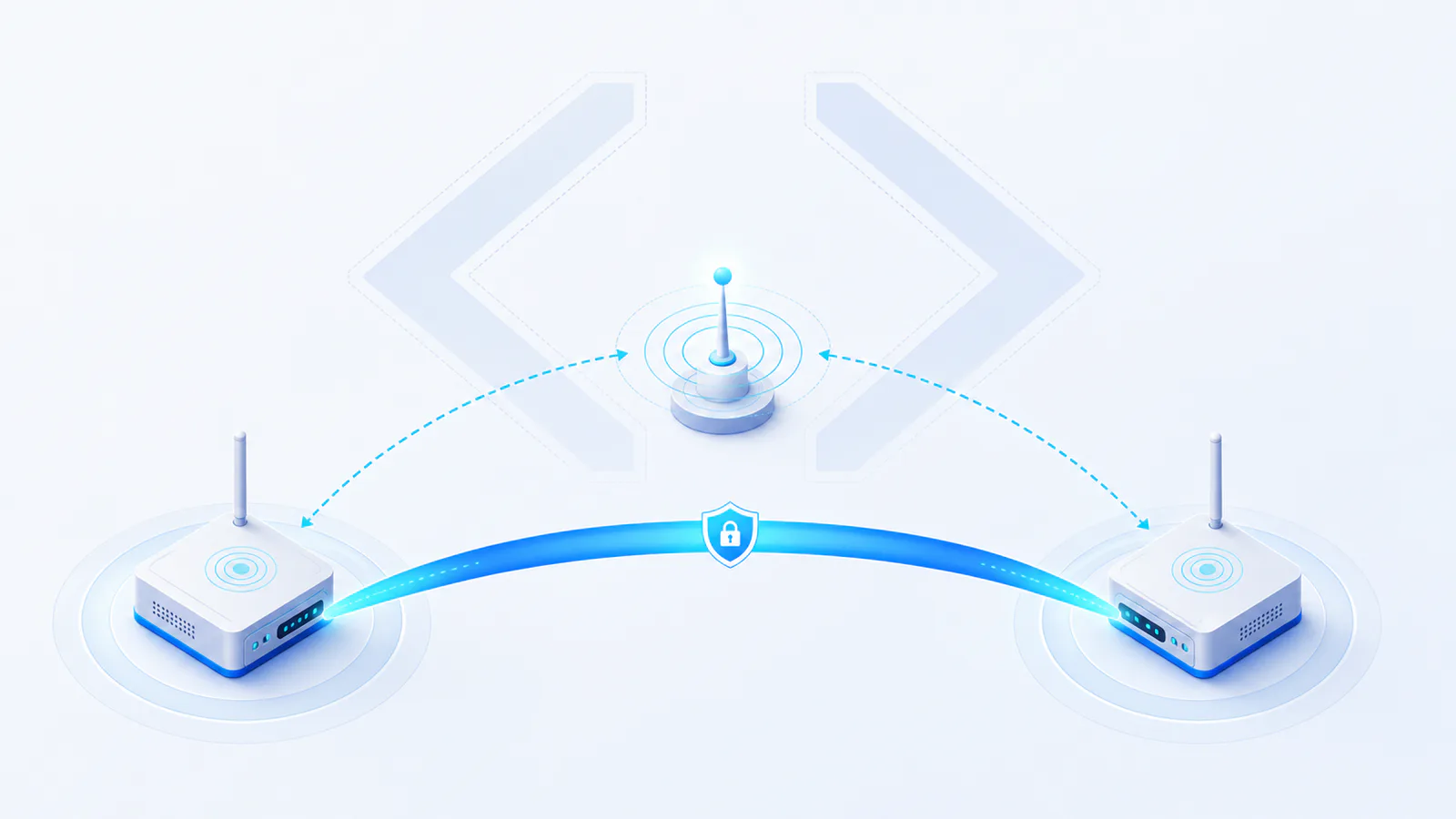
When engineers say "STUN-like coordination" in a WireGuard environment, they usually mean a narrow control-plane service that helps peers discover a path without becoming the long-term data path.
The rendezvous plane typically does five jobs:
-
Discover candidates
Collect private addresses, server-reflexive addresses, and reachable UDP ports. -
Exchange intent
Tell Peer A that Peer B wants to connect, and vice versa. -
Schedule simultaneous sends
This is the practical heart of hole punching: both peers need to send at the right time to open NAT mappings. -
Decide when to relay
If direct traffic fails fast, move to a relay rather than leaving the user hanging. -
Keep policy outside the tunnel
Tenant rules, peer permissions, abuse throttles, and billing all live above the WireGuard data plane.
That is why the architecture is best understood as WireGuard-compatible P2P with a separate coordination system, not as "STUN plus vibes."
Why P2P Is Still Worth Chasing
Bryan Ford, Pyda Srisuresh, and Dan Kegel found that about 82% of tested NATs supported UDP hole punching. That paper is old, but the core lesson still matters: if you try direct first, you win often enough that the effort is economically and operationally justified.
RFC 8656 explains the other side of the equation. TURN-style relays exist for the cases where direct paths fail, but the ideal case is still the one that does not traverse relays. In plain English:
- Direct P2P lowers latency
- Direct P2P lowers relay bandwidth cost
- Direct P2P keeps the data plane simpler
- Relay is the safety net, not the design center
That is exactly why a WireGuard overlay should be built as P2P-first, relay-second.
Where Wantastic's Value Actually Lives
If you strip the idea down to first principles, there are really three different things here:
| Layer | Typical responsibility | Does it have to be open source? |
|---|---|---|
| WireGuard-compatible edge code | Handshake integration, peer config, tunnel lifecycle | Optional |
| Rendezvous / NAT traversal code | Candidate exchange, retry timing, relay fallback | Optional |
| Commercial control plane | Tenant policy, anti-abuse, analytics, billing, fleet UX | Usually no |
This matters because "open-source the whole thing" is usually the wrong question.
A better question is:
Which part creates trust and ecosystem value, and which part creates product differentiation?
For many teams, the answer looks like this:
- Open-source the edge adapter or compatibility layer
- Open-source test harnesses and NAT lab tooling
- Maybe open-source a reference relay
- Keep tenant policy, commercial routing policy, and abuse-defense systems closed
That split is often strategically cleaner than forcing everything into one license bucket.
The License Reality Around WireGuard Code
The official WireGuard project is not one repository under one license. The WireGuard repositories page lists multiple official subprojects: kernel, tools, Go userspace implementation, Rust implementation, platform clients, and more.
That means the open-source decision depends on what you actually copied or linked, not on the WireGuard brand alone.
Here is the practical matrix:
| Component you might use | Official source | License signal | Practical implication |
|---|---|---|---|
| wireguard-go | Official userspace Go implementation | MIT | Very permissive; easier to integrate in mixed-source products |
| wireguard-tools | Official userspace config tools | GPLv2 | Copying tool code into distributed derivatives raises copyleft obligations |
| Linux kernel / backport code | Official kernel-side repos | GPL-oriented ecosystem | Stronger copyleft expectations when distributed as derivative code |
| Your own rendezvous API | Your code | Your choice | Open or closed is a product decision |
So the decision boundary is not "Did we build around WireGuard?" It is closer to:
Did we copy permissive code, copy copyleft code, or merely interoperate with the protocol?
That last category is usually where commercial coordination layers live.
A Cleaner Open-Source Strategy for Wantastic
If I were drawing the line for a product like Wantastic, I would strongly consider this split:
Open-source candidates
- developer-friendly peer configuration libraries
- NAT traversal test fixtures
- interop examples around WireGuard-compatible peers
- a small reference rendezvous service for local labs
Better kept closed
- abuse scoring and traffic reputation logic
- commercial relay placement policy
- tenant-aware authorization and fleet policy
- accounting, quotas, and billing systems
- incident response tooling and operational telemetry
That preserves community trust around the wire protocol boundary without turning the operating business into a public runbook.
One Important Caveat: This Is Engineering Guidance, Not Legal Advice
The license facts are straightforward in the official source trees. But whether a particular build, distribution model, or code path creates derivative-work obligations is still a legal review question.
The safe engineering habit is:
- Track exactly which WireGuard repositories or files were incorporated
- Separate protocol interop code from copied implementation code
- Keep NOTICE / LICENSE handling clean from day one
- Ask counsel before shipping anything built from GPL-derived code in a proprietary package
That combination prevents the classic mistake: discovering license complexity only after the product architecture is already hard to unwind.
Sources and White Papers
- RFC 8489: Session Traversal Utilities for NAT (STUN)
- RFC 8656: Traversal Using Relays around NAT (TURN)
- Bryan Ford, Pyda Srisuresh, Dan Kegel - Peer-to-Peer Communication Across Network Address Translators
- WireGuard official repositories
- wireguard-go LICENSE
- wireguard-tools COPYING