Short Answer
Yes, USP traffic can absolutely ride across a WireGuard tunnel today. But that is not the same thing as saying WireGuard is already a standardized USP Message Transfer Protocol.
The current Broadband Forum TR-369 text is pretty clear about the layering. USP Endpoints communicate over one or more Message Transfer Protocols (MTPs), and the MTP is an application-layer transport. In Issue 1 Amendment 5, the spec also says an Agent needs enough discovery data to determine at least one MTP, IP address, port, and resource path (if required by the MTP) of the Controller.
That detail matters. WireGuard is a layer-3 encrypted UDP tunnel, not an application-layer message binding. So from the standard's current wording, the clean standards-compliant reading is:
- Use WebSocket, MQTT, or STOMP as the USP MTP
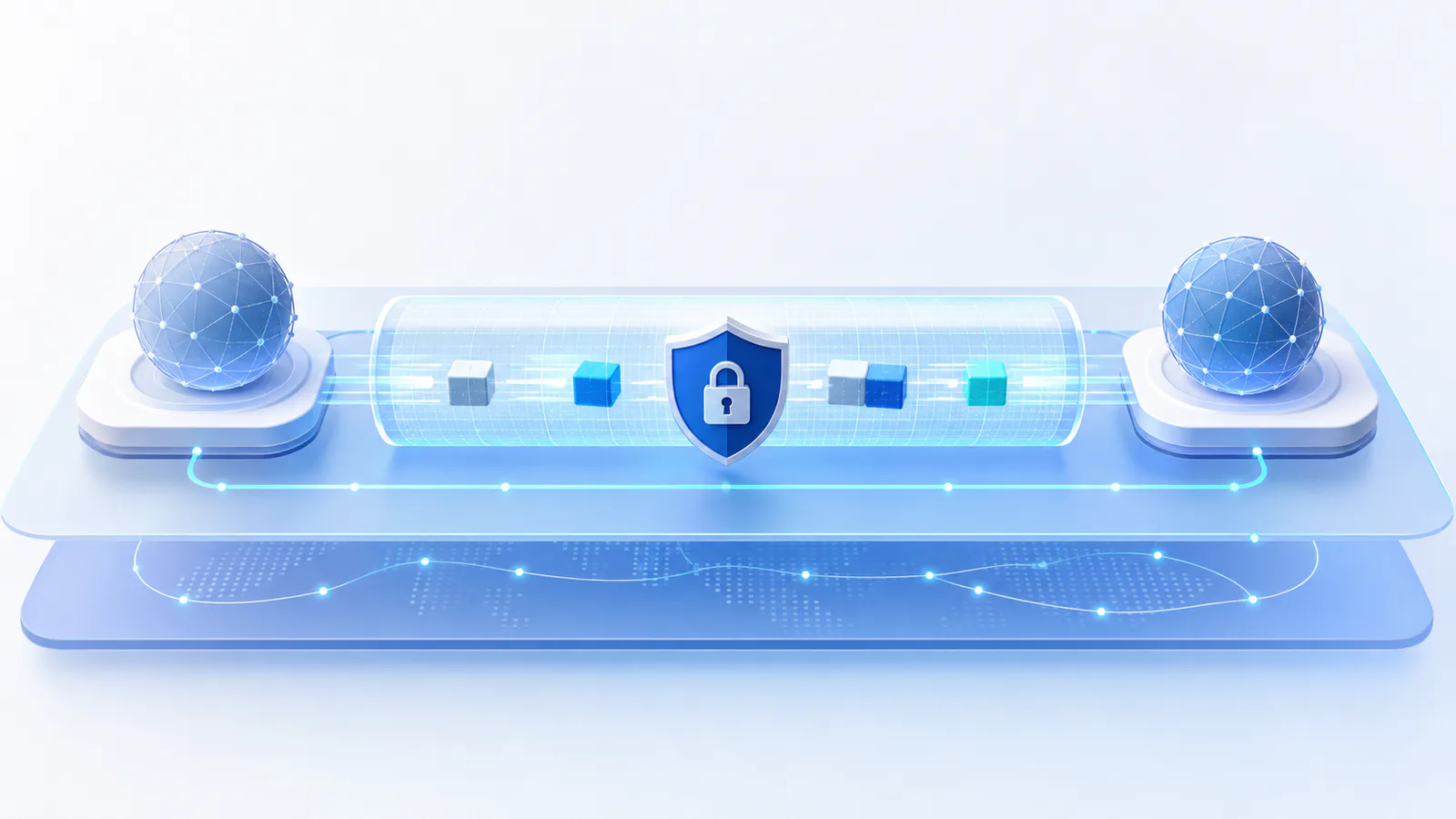
- Optionally run that MTP inside WireGuard as the secure network underlay
That is very different from inventing a new native "Noise-over-UDP" USP binding.
What TR-369 Standardizes Today
Broadband Forum TR-369 defines the secure message model, Endpoint identity, discovery model, and MTP bindings that Controllers and Agents use to exchange USP Records. In the transport chapters, the specification enumerates bindings for:
- CoAP (earlier editions)
- WebSocket
- STOMP
- MQTT
- UNIX domain sockets
The same spec also states that when USP Messages cross inter-network boundaries, the MTP must use secure transport. For the mainstream internet-facing bindings, that means TLS-backed security.
| Question | What TR-369 says today | Engineering consequence |
|---|---|---|
| Is USP tied to one transport? | No, it supports multiple MTPs | Good fit for mixed deployments |
| Is the transport application-layer or network-layer? | Application-layer | WireGuard is below this layer |
| Does inter-network communication need secure transport? | Yes | You cannot bolt on plaintext and still call it aligned |
| Does discovery include endpoint location details? | Yes: MTP, IP, port, resource path as needed | A new binding needs its own discovery grammar |
This is why a vendor cannot simply say "we replaced MQTT with Noise" and declare full interoperability. A real USP binding has to define:
- How Endpoint discovery advertises the transport
- How USP Records are framed
- How segmentation and reassembly behave
- How authentication maps to USP roles and certificates
- How retry, reconnect, and broker behavior work
What WireGuard Brings to the Table
WireGuard solves a different problem very well. The WireGuard whitepaper describes a compact VPN protocol built around UDP and a Noise-based handshake, specifically the Noise IK pattern. In practice that gives engineers:
- Fast key agreement
- Mutual authentication with static public keys
- Minimal attack surface
- Strong roaming behavior on changing IPs
- A very small conceptual state machine compared with legacy VPN stacks
That is attractive for embedded management protocols because USP Agents often live on devices with tight CPU, memory, and firmware budgets.
But WireGuard's strength is also the reason it is not automatically a USP transport. It is designed to move IP packets, not to define:
- application destinations
- broker semantics
- record boundaries
- controller discovery URIs
- message-level error handling
Those are USP-level concerns.
Where a Modified Noise Design Gets Interesting
A Noise- or WireGuard-inspired MTP becomes interesting when you want all of the following at once:
- lower overhead than TLS-over-broker stacks
- good behavior on mobile and CGNAT links
- direct peer relationships instead of central brokers
- a smaller implementation footprint for constrained Agents
That makes the idea technically plausible.
From an engineering perspective, there are three realistic paths:
| Path | Standards status | Good for | Main drawback |
|---|---|---|---|
| USP over existing MTP inside WireGuard | Works today | Shipping products now | Two layers instead of one |
| Vendor-private Noise MTP | Proprietary only | Controlled fleets | No multi-vendor interoperability |
| Broadband Forum-standardized Noise MTP | Not standardized today | Ecosystem adoption | Requires spec work and interop testing |
The first path is the safest. It gives you NAT reachability and strong tunnel security now, without forking USP semantics.
The Hard Part Is Not Crypto, It Is Semantics
The tempting mistake is to treat this as a cryptography question only. It is really a protocol-semantics question.
TR-369 already has strong opinions about:
- Endpoint IDs
- authorization roles
- trusted brokers
- record integrity
- session contexts
- secure message exchange
A new Noise-based transport would have to explain how those pieces interact with:
- static Noise identities
- certificate-based authorization
- relay or broker mediation
- NAT traversal hints
- path migration
There is also an important key-management caution from the Noise Protocol Framework itself: static keys should not be casually reused outside their intended protocol context. So a future USP binding should not naively recycle WireGuard keys, X.509 identities, and custom Noise roles without a deliberate security model.
What I Would Do If the Goal Is Shipping, Not Theory
If the product goal is remote device management over hard networks such as CGNAT, LTE, and satellite, my recommendation is:
- Keep USP on a standards-defined MTP such as MQTT or WebSocket
- Use WireGuard as the reachability and security underlay
- Add NAT traversal, relay fallback, and path optimization outside the USP message model
That preserves interoperability and still captures most of the operational benefit.
If the goal is to push the ecosystem forward, then the right move is not a quiet vendor extension. It is a formal proposal for a new USP MTP binding with discovery, framing, security, and role semantics written down in a way other vendors can implement.
That last sentence is an inference from the standard structure, not a direct quote from Broadband Forum. But it is the cleanest engineering interpretation of the spec as it stands in January 2026.
Sources and White Papers
- Broadband Forum TR-369 Issue 1 Amendment 5 (January 2026)
- Broadband Forum TR-369 Issue 1 Amendment 3 / transport table of contents
- WireGuard: Next Generation Kernel Network Tunnel
- WireGuard protocol notes
- The Noise Protocol Framework